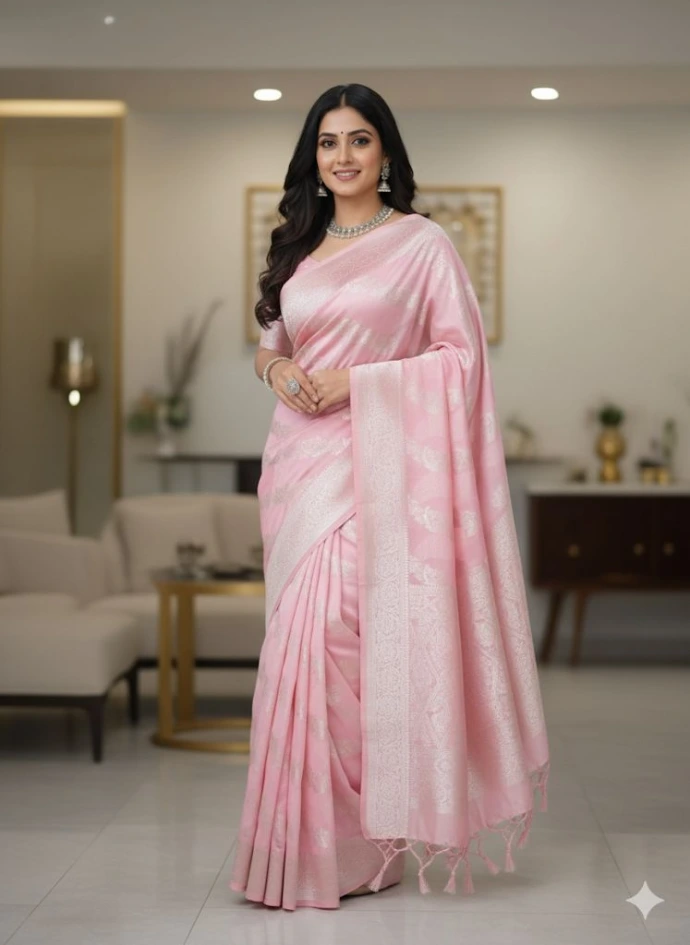
In India, buying a silk saree is never just shopping. It’s an emotion ❤️
It could be for your wedding, your sister’s engagement, Durga Puja, Diwali, or simply because you saw one and couldn’t resist.
Many of us still remember our mother’s or grandmother’s silk saree carefully folded in the cupboard, taken out only for special occasions. That’s the value of real silk.
But today, the market is full of “silk-type” and “silk-blend” sarees. They look similar, feel similar for a minute — but are they really pure?
Let’s understand in a simple and practical way 👇
🏷️ 1️⃣ Look for Silk Mark Certification
The safest way to identify genuine silk is to check for the Silk Mark given by the Silk Mark Organisation of India.
If a saree has this mark:
✔️ It confirms 100% pure silk
✔️ It meets quality standards
✔️ It protects buyers from fake products
If you are buying offline, simply ask the seller. A genuine store will happily show you the certification.
✋ 2️⃣ Trust Your Hands – Touch & Feel Test
Pure silk has a very unique feel.
When you touch it:
✔️ It feels soft and smooth
✔️ It is not overly slippery
✔️ When rubbed gently, it feels slightly warm
This warmth comes from natural protein fibres.
Fake silk (like polyester):
❌ Feels very slippery
❌ Feels cold
❌ Has a slightly plastic touch
Sometimes, your fingers can detect what your eyes cannot.
💫 3️⃣ Observe the Natural Shine
Real silk does not have a loud or plastic shine.
When you move it under light:
✨ The colour slightly changes
✨ It reflects light beautifully
✨ It looks rich and deep
Artificial silk usually looks:
❌ Too glossy
❌ Same shine from every angle
❌ Slightly artificial
If it looks too shiny to be true, check again.
🧵 4️⃣ Check the Weaving Carefully
In traditional sarees like Banarasi or Kanjivaram:
✔️ You will notice fine detailing
✔️ Slight irregularities (which is a good sign!)
✔️ Intricate zari work
Handloom sarees are made by artisans, so tiny variations are normal.
Machine-made fake silk usually looks too perfect and flat.
Real craftsmanship always has character.
🔥 5️⃣ The Burn Test (Only If Safe)
⚠️ Do this only with a loose thread and carefully.
Pure silk:
✔️ Smells like burnt hair
✔️ Leaves soft black ash
✔️ Stops burning when flame is removed
Synthetic fabric:
❌ Smells like plastic
❌ Melts and forms a hard bead
If buying online, you cannot do this test — so rely on certification and brand trust.
💰 6️⃣ If It’s Too Cheap, Think Twice
Let’s be practical.
If someone is selling a “pure silk saree” for ₹800 or ₹1000, be careful.
Real silk involves:
🧵 Genuine silk threads
👩🎨 Skilled artisans
⏳ Time and effort
✨ Detailed weaving
Pure silk sarees are not cheap — they are investments.
🌟 7️⃣ Check the Zari Quality
In premium silk sarees, good zari work:
✔️ Looks rich and bright
✔️ Does not turn dull quickly
✔️ Adds real value
Fake zari:
❌ Turns black after few washes
❌ Loses shine quickly
Good zari enhances both beauty and durability.
🤝 8️⃣ Buy from a Trusted Store
The easiest way to avoid confusion? Buy from someone you trust.
A reliable store focuses on:
✔️ Quality checking
✔️ Authentic sourcing
✔️ Proper finishing
✔️ Customer satisfaction
When you buy from a trusted brand like Bijayalaxmi Saree, you shop with confidence.
🌸 Why Pure Silk Is Always Worth It
✔️ Long-lasting
✔️ Elegant and timeless
✔️ Perfect for weddings & festivals
✔️ Never goes out of fashion
✔️ Can be passed down to the next generation
A pure silk saree is not just fabric. It carries memories, tradition and pride.
💭 Final Thoughts
Buying a silk saree should feel joyful, not confusing.
Take your time. Touch the fabric. Observe the shine. Ask questions. Check certification.
When you choose pure silk, you are choosing something that will stay with you for years — maybe even become part of your family’s story ❤️art writing here...
🧵 Frequently Asked Questions (FAQs)
1️⃣ How can I identify a pure silk saree at home?
You can check pure silk by doing a touch and feel test (real silk feels soft, smooth, and slightly warm), a ring test (it passes easily through a ring), and by examining the weave. Pure silk has minor irregularities because it is made from natural fibers.
2️⃣ What is the Silk Mark certification in India?
The Silk Mark is an authenticity label issued by the Silk Mark Organisation of India. It guarantees that the saree is made from 100% pure natural silk. Always look for the Silk Mark tag while purchasing.
3️⃣ What is the difference between pure silk and artificial silk?
Pure silk is made from natural silk fibers produced by silkworms, while artificial silk (also called art silk) is made from synthetic fibers like polyester or rayon. Pure silk has a natural shine and softness, whereas artificial silk often feels slightly rough and looks overly glossy.
4️⃣ Can we do a burn test to check pure silk?
Yes, a small thread burn test can help. Pure silk smells like burnt hair and turns into ash, while synthetic silk smells like plastic and forms hard beads. However, this test should only be done carefully and usually by experts.
5️⃣ Why is pure silk saree more expensive?
Pure silk sarees are expensive because they are made from natural fibers and often handwoven with detailed craftsmanship. The production process is time-consuming, which increases both quality and cost.